English
 عربى
عربى
 Bahasa Melayu
Inquiry
Inquiry
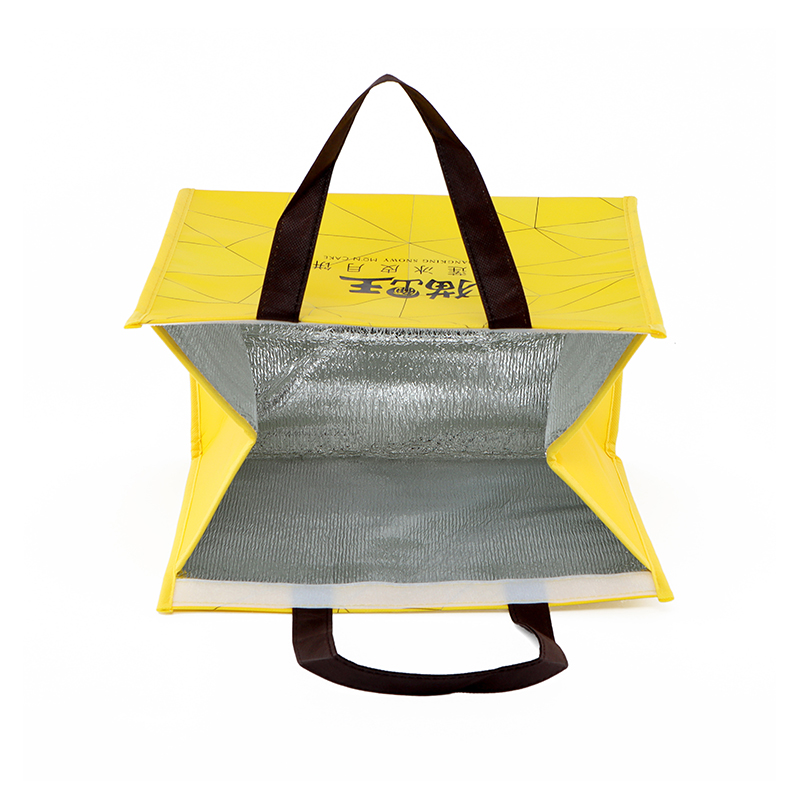
The demand for temperature-controlled packaging has quietly expanded far beyond food delivery. From pharmaceuticals to outdoor recreation, thermal bags now sit at the intersection of logistics, sustainability, and daily convenience. In this context, the role of a Thermal Bag Factory is no longer limited to basic insulation and stitching. Instead, factories are being reshaped by material innovation, diversified use scenarios, and closer collaboration with brands. Understanding how these factories operate today offers useful insight for buyers and distributors looking for long-term partners.
Early thermal bags focused on one task: slowing heat transfer. Today, application scenarios guide nearly every design decision. A lunch bag for office use, a grocery thermal tote, and a medical transport bag each require different insulation thickness, lining materials, and closure systems.
A modern Thermal Bag Factory often begins development by mapping usage conditions—transport time, ambient temperature, cleaning frequency, and load weight. These factors influence whether aluminum foil layers, PE foam, or composite fabrics are selected. Rather than building one standard product, factories increasingly maintain multiple production lines to support varied functional needs.
Material sourcing has become a key area where factories distinguish themselves. Buyers are no longer only concerned about thermal performance; durability and recyclability matter just as much.
Common material considerations include:
A capable Thermal Bag Factory balances insulation efficiency with realistic cost control, ensuring materials remain stable during repeated folding and cleaning. Some factories also test materials under humidity and compression conditions to better simulate real transport environments.
As order volumes grow and product types diversify, internal management systems play a larger role. Factories that rely solely on manual inspection often struggle with consistency when scaling.
Many suppliers now integrate batch tracking, material inspection checkpoints, and semi-automated cutting processes. These steps help reduce deviation across large orders. For overseas buyers, consistent stitching density, zipper alignment, and insulation thickness can matter more than design novelty.
Below is a simplified view of how factories often align production focus with buyer expectations:
| Buyer Priority | Factory Response |
| Stable bulk quality | Standardized process flow |
| Custom branding | Flexible printing and label integration |
| Cost control | Material optimization and yield planning |
| Compliance requirements | Documentation and sample validation |
This operational clarity is one reason many brands prefer working directly with a Thermal Bag Factory rather than multiple trading layers.
Customization has shifted from being a premium feature to a baseline expectation. That said, excessive customization can slow delivery and raise costs. Experienced factories guide buyers toward practical options—logo placement, size adjustments, or handle structure—while keeping core construction unchanged.
A well-organized Thermal Bag Factory usually maintains a library of proven bag structures. These templates allow faster sampling while still giving brands enough room to differentiate. This approach supports efficiency without turning every project into a full redesign.
Environmental considerations are no longer limited to marketing language. Many importers now ask about recycled fabrics, reduced packaging, and product lifespan. While thermal bags are not disposable items, their material mix can complicate recycling.
Factories respond by offering mono-material options or detachable components that simplify sorting after use. A forward-looking Thermal Bag Factory often treats sustainability as part of product engineering rather than an add-on feature.
Selecting a factory today is less about finding the low unit price and more about aligning production capability with market direction. Buyers benefit from asking how factories test insulation performance, manage repeat orders, and adapt to regulatory changes across regions.
As cold-chain applications continue to expand, the value of a responsive, technically grounded Thermal Bag Factory becomes clearer. These factories are not just making bags; they are supporting reliable temperature control across everyday and specialized use cases, one production run at a time.
Join Us
For 12 years, we have focused on the production and manufacturing of handbags, constantly innovating and researching.
Seed Message
Megalith

China Insulation Bags